Horse owners find a yard that has real space, and the professionals they can actually check. Yards fill their stables. Farriers, physios and grooms find more work close to home.
One marketplace for all three — in your pocket.
For creators
We work with a small number of people who ride, teach or run yards. hello@openstable.co.uk, or the form at the foot of this page.
The three jobs
Three jobs, and they all meet in one place.
An owner looking, a yard with a stable free, and the professionals who cover that postcode. Here is what it takes for those three to find each other — drawn on one map.
Say an owner needs a yard by March.
1
She needs a yard by March
Sorted by twelve hours of winter turnout in paired groups — not by “turnout: yes”.
2
The yard can already see her
Yards inside her search area can see someone is looking, and reach out first. She decides whether they can.
3
Her farrier doesn’t drive that far
Coverage is where a farrier will actually drive. Twenty miles from Salisbury reaches the new yard; her old farrier never did.
4
A physio sees the work appear
Professionals set the ground they cover, and see the yards and owners inside it. New work appears because a horse moved.
★Founding Member
2 spaces
Hollybrook Stables
from £650/mo
Wiltshire, SP4 7AA
A 14-horse yard on the chalk downs near Salisbury. Twelve hours winter turnout in paired groups, sandy paddocks with hardstanding gateways.
Every directory works the same way. You put yourself on a list, and then you wait for the right person to walk past it on a day they happen to be looking. A group post is the same bargain with a shorter shelf life.
OpenStable runs in both directions. A yard with an empty stable can see the owners searching its area and invite them. A farrier can see the yards inside the ground they cover and offer them work. Nobody has to sit still and hope.
A directory
You are a phone number on a page. Someone else has to find you, on a day they happen to look.
A group post
You are visible for one afternoon, to whoever is scrolling that afternoon.
OpenStable
You can see who needs you this week — and start the conversation yourself.
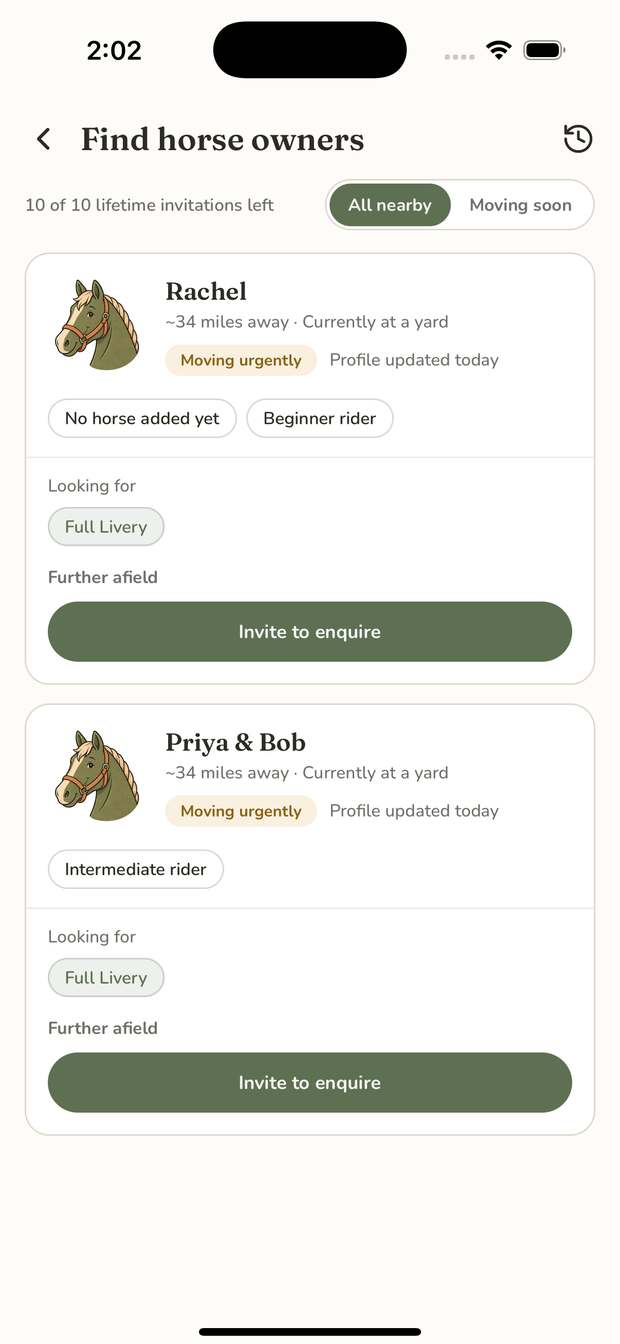
Find horse owners — who is searching near your yard, how urgently they are moving, and what they are looking for.
For yards
Fill the stable yourself.
An empty stable is a cost, not a listing. OpenStable shows you the owners searching your area right now — how far away they are, what livery they want, how urgently they are moving — and lets you invite the ones who suit your yard.
1
See who is moving. Owners near you, with the urgent ones flagged and the stale profiles filtered out.
2
Invite the ones who fit. Ten lifetime invitations, one per owner, every one of them chosen by you.
3
It arrives as an enquiry. In your inbox, in a thread you can answer — not a DM that scrolls away.
For professionals
Find more work, closer to home.
Most equine professionals build their work on word of mouth, which only ever reaches the people who already know them. OpenStable shows you the yards and owners inside the ground you cover, tells you which of them are looking right now, and lets you offer them work directly.
1
See who is in your patch. Yards and owners inside your coverage radius, ranked by who is most likely to need you.
2
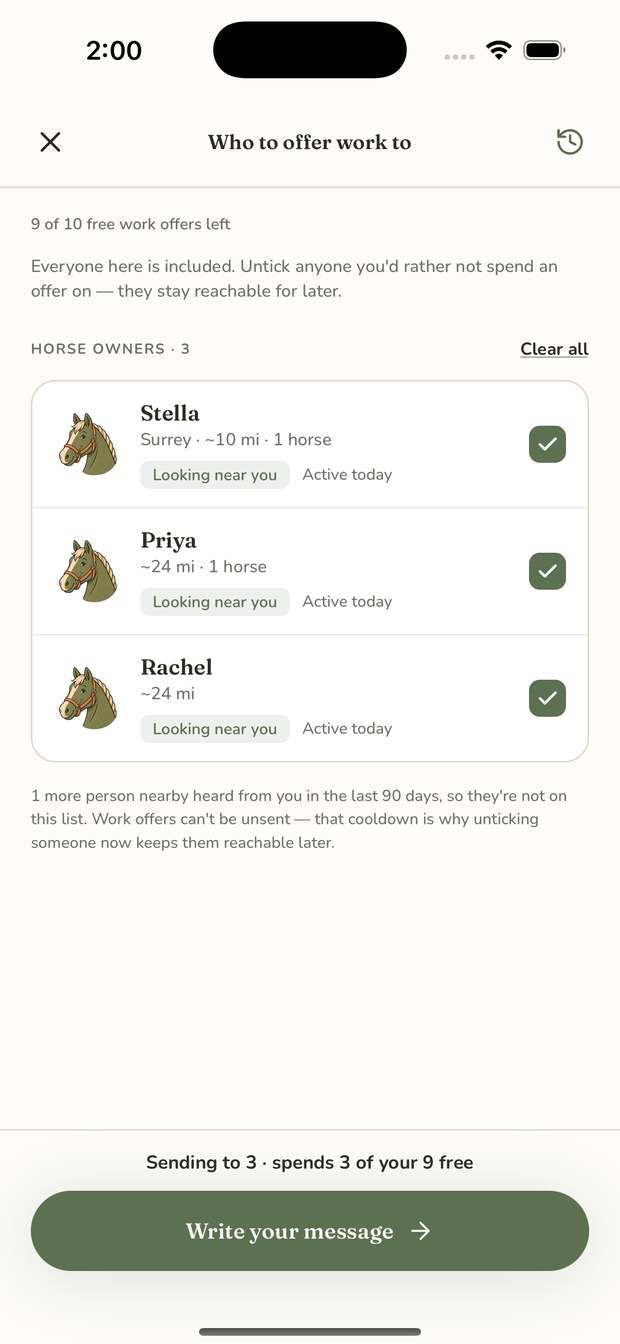
Choose who to approach. Ten free offers, one per person. Untick anyone you would rather keep for later.
3
They reply in a thread. A conversation with a record, rather than a missed call.
Who to offer work to — the people near you who are looking, each one ticked by hand, and the exact cost of sending shown before you send.
Not a directory
Why a list can’t do this.
Most of this still happens in Facebook groups, and the honest part is that they work. They’re free, everyone is already there, and a good group can find you a yard by Friday.
What a group cannot do is hold anything still. A post asking for winter turnout near Salisbury is buried by teatime. Nobody can filter it, nobody can put two yards side by side, and the farrier who covers that postcode never sees it at all. Next week someone asks the same question, and the group answers it again from scratch.
A directory doesn’t fix it either. A directory is a phone number and a hope — a list of businesses that existed when someone last checked, with no way of knowing whether any of them has a stable free this March.
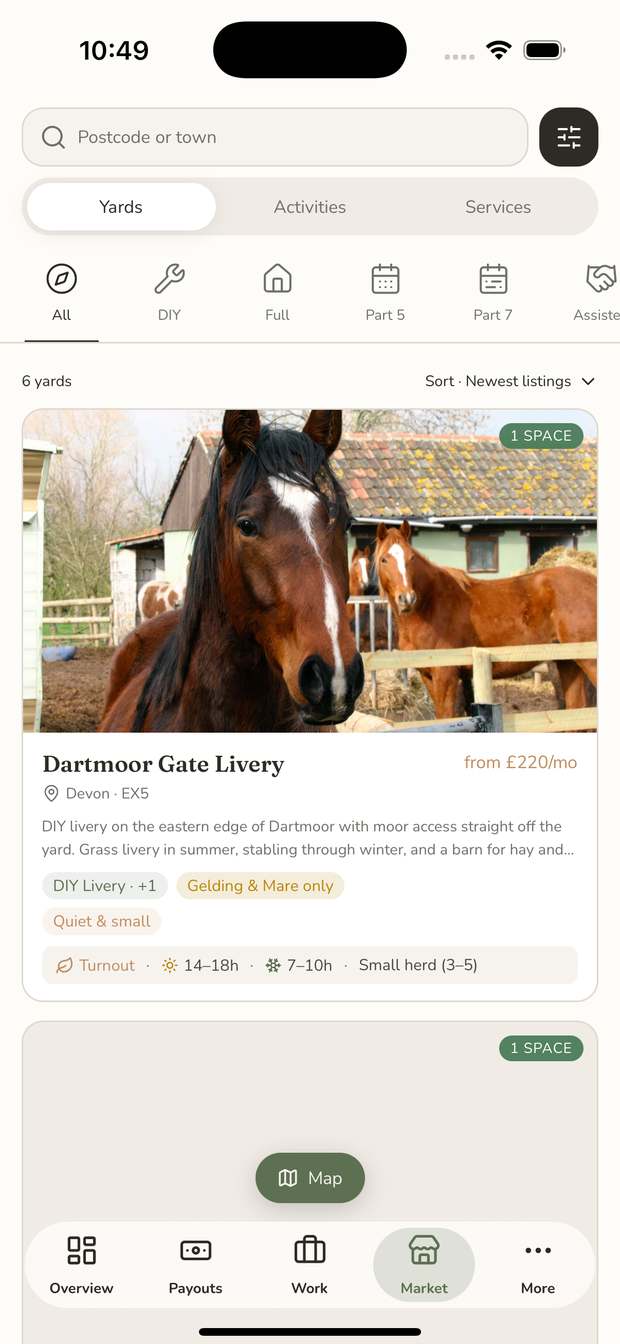
Six yards, filtered and sorted — price, spaces and winter turnout hours on every card. One screen holds what a group thread cannot.
Buried by teatime
A post has a half-life of about four hours. A listing is still there in March.
Impossible to compare
Winter turnout hours, group size, price, spaces. Side by side, in one screen.
No way to check
Reviews scored across five things, accreditations, and a listing the yard is asked to re-confirm.
A list tells you who exists. OpenStable tells you who can help, and when.
What we’re building
Your profile works for you.
This isn’t a database of the equestrian world. It’s three kinds of business describing themselves once, properly, so the right person can find them — and the more of that there is, the better every match afterwards gets.
You keep a horse
Stop repeating yourself
Three group posts and twenty open tabs, and you still don’t know who has a stable. Say it once instead — turnout, budget, how far you’ll travel — and the yards that match can come to you. Switch that off whenever you like.
You run a yard
Fill the empty stable
An empty stable earns nothing, and the owner who would fill it is three villages away and doesn’t know you exist. Publish the space once and it stays on search — and you can invite the owners already looking.
You provide a service
Win the work nearby
Word of mouth stops at the edge of the people who already know you. Draw the ground you cover instead: the yards and owners inside it can find you too, and you can offer them work first. No advert, no listing fee.
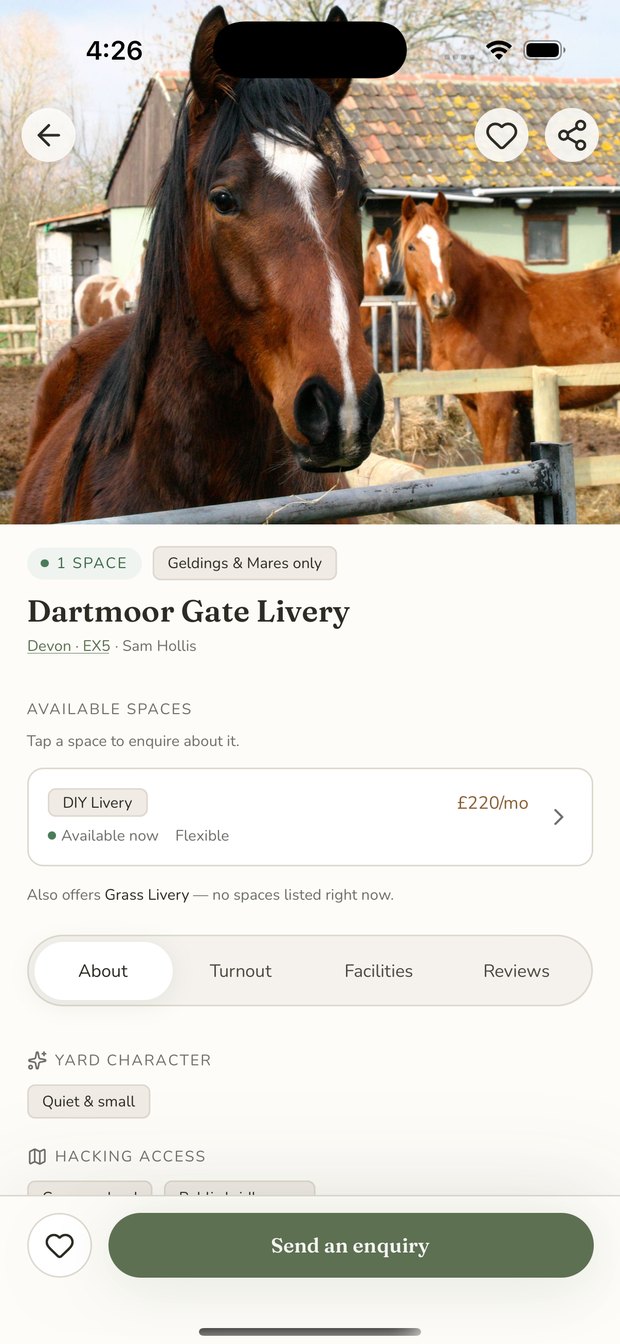
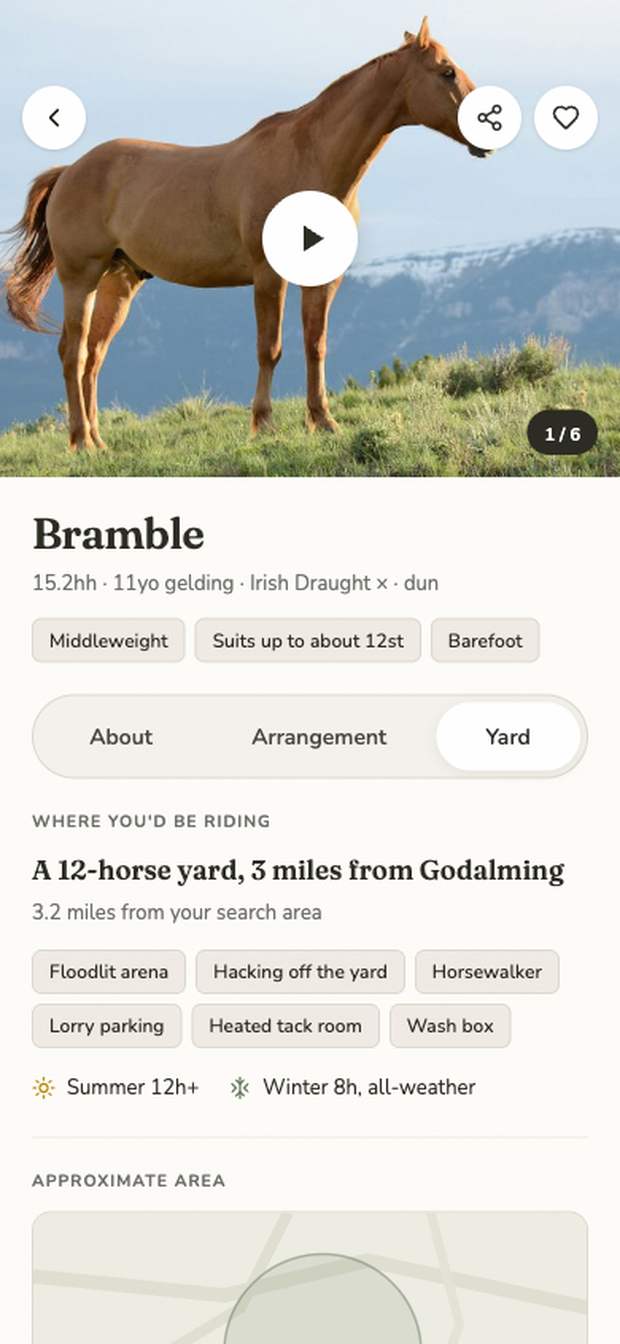
The yard. The space, the price, and whether it is free right now — on the page itself. A yard publishes it once; owners searching that area keep finding it.
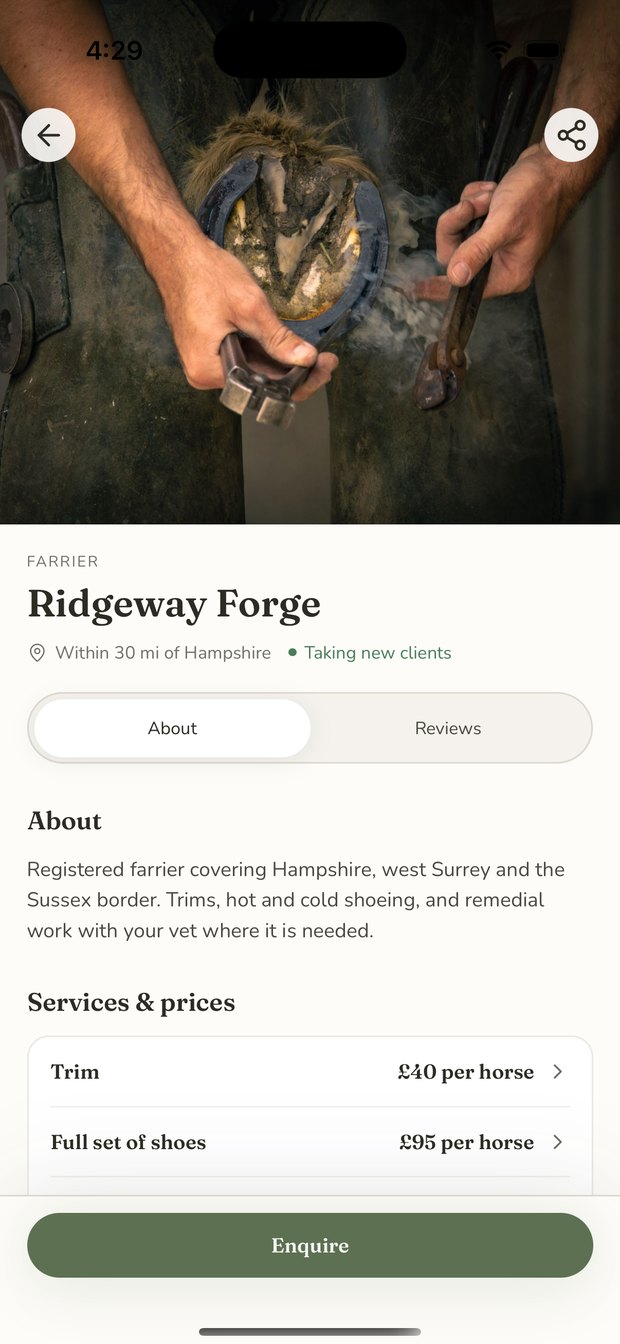
The professional. How far they travel, what they charge, and whether they’re taking anyone on. Three things you used to have to ring up and ask.
Every one of these is published by the person it belongs to — and every one of them can be switched off.
Loans & shares · coming soon
Loans and shares are coming to OpenStable.
A part-share, so somebody rides two days a week and the bills get lighter. Or a full loan, so a horse you can no longer keep goes to someone you have actually been able to check — and you keep the passport, and the title. No date yet. Here is why we are building it, and how we intend to make it safe.
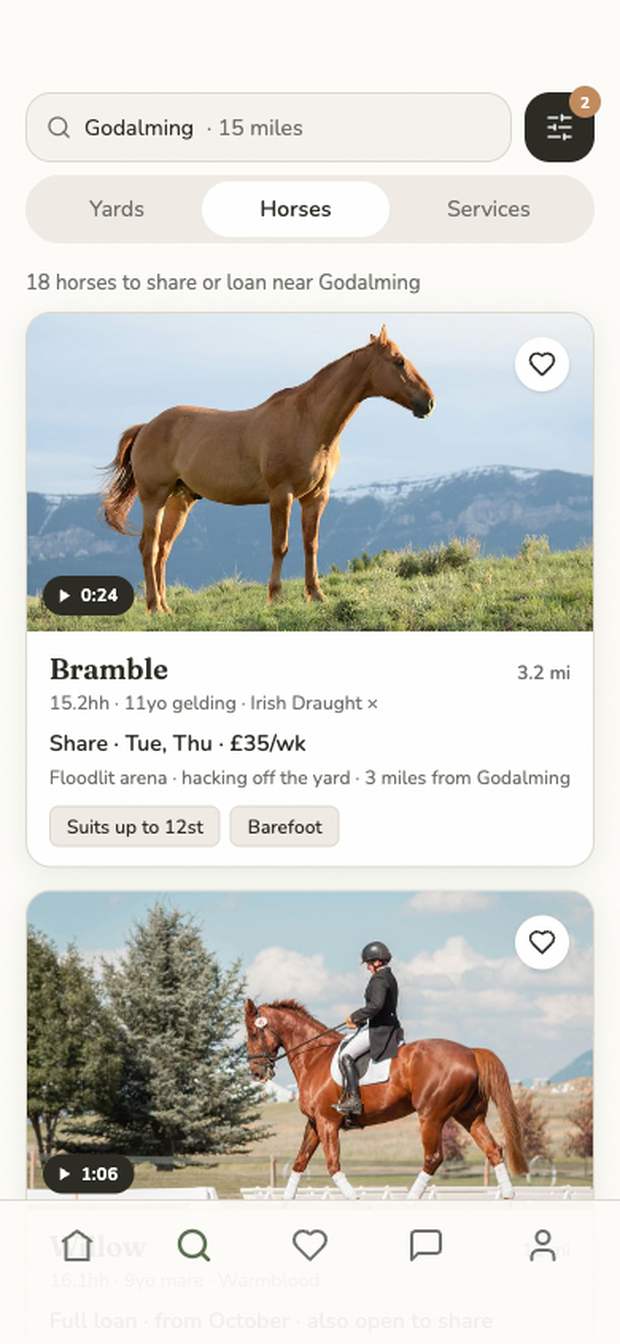
Horses to share or loan near you. The days, the weekly rate and the distance on the card — before you speak to anyone.
And the yard behind it. Turnout hours, hacking, facilities — because you are choosing a place as much as a horse.
One · the job
One person can’t keep going. Another can’t get started.
On one side: an owner whose costs, job, health or family have changed, who will not sell an animal they love and cannot carry it alone any longer. On the other: someone who rides well, wants a horse in their life, and cannot take on fourteen hours a week and a five-figure year.
Those two people are the answer to each other. Today they find each other almost entirely inside Facebook groups, with nothing to go on but a stranger’s word.
Two · trust
We’ll check the people. We won’t pretend to know the horse.
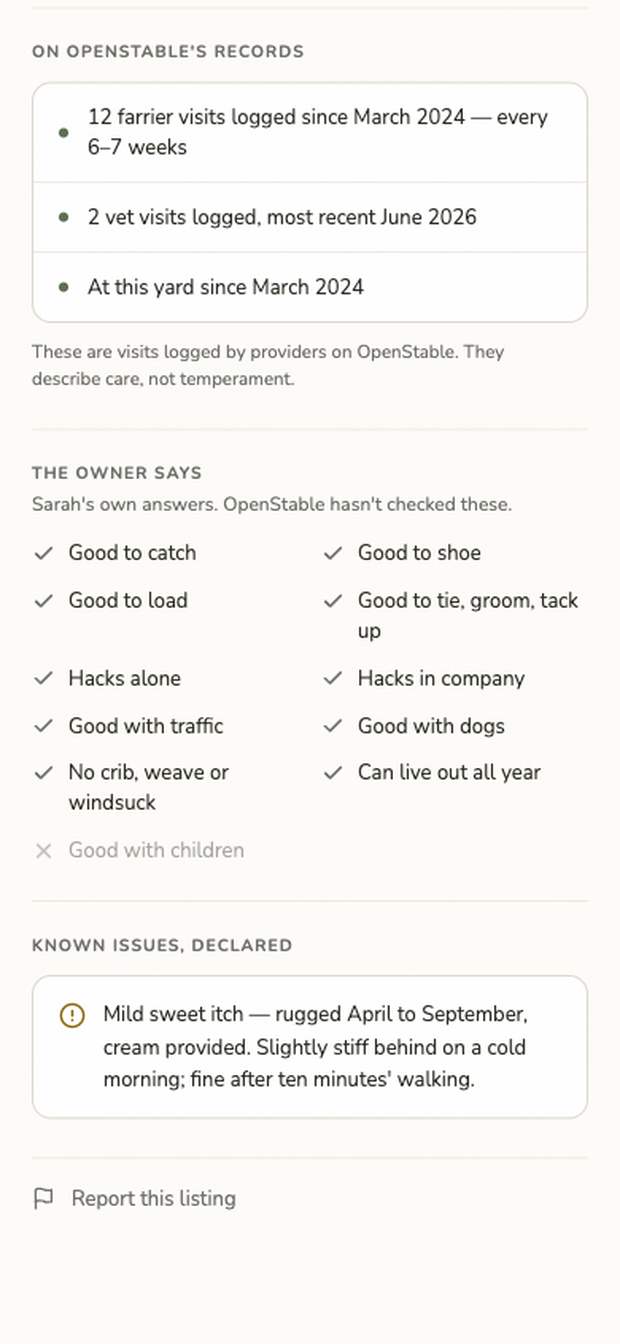
Handing over a horse, or taking one on, comes down to one question: can I believe this person? Every rival answers it with an eleven-box checklist that every listing ticks in full — self-declared, free to claim, and covering exactly the things people are most afraid of being lied to about.
Everywhere else: the horse’s manners, self-declared
Lives out all year
No crib or weave
Good to catch
Hacks alone
Hacks in company
Loads
Good to shoe
Good to tie, groom, tack
Good with children
Good with dogs
Good in traffic
Eleven boxes, ticked in full, on every listing. Nobody checked any of it.
Here: the record, and the owner’s own words
Both, and clearly separated. What the providers logged sits at the top, with “they describe care, not temperament” written on it. The owner’s own answers sit underneath, labelled as hers — and she is free to leave one unticked.
Also coming, and smaller: the farrier, physio and dentist a yard already works with, shown on the yard’s own listing.
For creators
Working with creators.
We’d like to work with a small number of people who ride, teach, and run yards — people already talking to the audience OpenStable is built for. There’s no template and no fixed deal.
What we can offer: early access before a feature ships, a county to launch in, and a named person who answers — not an inbox. Tell us three things and we’ll come back to you.
We built OpenStable because we kept watching how much work it takes to move one horse, and how little of that work anyone else can see. The yard doesn’t know you’re looking. The farrier doesn’t know the yard exists. Everyone is doing their best with a post in a group.
It’s early, and we’re building it county by county. If something here is wrong, or missing, or would be better another way — tell us. It comes straight to us.