Structured turnout data

Turnout, finally on the page where it belongs

Nine structured fields on every UK livery listing — summer and winter hours, group composition, soil, mud management. Built because “turnout: yes” isn’t an answer.

Live on every yard

This block renders on every published yard’s page. Tap between three example yards — from chalk-soil year-round turnout to a clay yard that admits to winter stable days.

Turnout & grazing

Updated today

Summer

18–24 hrs/day

0h12h24h

Winter

10–14 hrs/day

0h12h24h

Groups

Paired of 2Mares only

Land

SandyChalkHardstanding gatewaysRotated paddocksRegular harrowingDrainage works

Bad weather

Occasional keep-in

Stabled only in named storms or freezing rain. Hardstanding gateways mean we rarely close fields.

Paddock options

Strip grazingAllowed
Own paddockAvailable
The problem

“Turnout: yes” is the most-disputed two words in UK livery

Every “Yard A vs Yard B” thread on the UK forums eventually reduces to turnout: how many hours, in what weather, with how many other horses, on what kind of ground. And almost every listing answers the question in two words. Vague copy survives because nobody compares it side-by-side — the moment you can, the differences are stark.

“Yards often say ‘the worst wet weather’ etc and turns out at the moment it’s every other day or days on end… I’ve been tricked with that one many times, it’s actually soul destroying.”

We can’t make a yard’s claim true. We can make it specific, comparable, and dated.

Nine structured fields

Every field on every listing

Filterable in search. Comparable across yards. Dated when last updated.

  • Summer hours

    Range, like opening hours. A yard saying '12–24h' is honest about variation across paddocks; '8h max' is a different conversation. Surfaced as a min–max range on every listing.

  • Winter hours

    The number that matters. Most UK yards drop to 4–8h winter. Anything above 12h winter is the top decile. Filter by minimum on the search page.

  • Group composition

    Individual, paired, small herd (3–5), or large herd (6+). Plus typical herd size if it's a herd. The single biggest predictor of whether your horse will settle.

  • Sex grouping

    Mares-only, geldings-only, mixed, separated, or case-by-case. The reason a 'fine' gelding suddenly won't settle is often as simple as the herd composition changed.

  • Soil type

    Clay holds water and freezes lethally. Sandy is forgiving in winter but dries out. Chalk drains. Limestone is a gift. Yards pick from clay, sandy, chalk, loam, limestone, peat, mixed, or 'unsure'.

  • Mud management

    What the yard actually does about it. Hardstanding gateways, all-weather pens, paddock rotation, harrowing, daily poo-picking, drainage works, or a dedicated winter paddock.

  • Bad-weather policy

    Out in all weather, occasional keep-in, frequent keep-in, or stabled by default in winter. Plus a written qualifier — 'named storms only' reads very differently from 'whenever it's wet.'

  • Strip grazing

    Yes/no. Lets owners control grass intake without negotiating every time. Quietly the most-asked question by owners of native breeds and laminitics.

  • Owner-managed paddock

    Yes/no. Closer to private livery than full — the difference between 'use what you're given' and 'manage your horse's paddock yourself.'

In search

Triage on the card. Drill-down in the filter.

Every search result card puts those numbers up front in a chip strip. Something like “12h winter · paired” lets you triage twenty yards in the time it used to take to read one paragraph of free text — and the filter behind it turns the same fields into a stackable query you can bookmark and share.

An OpenStable yard card. The turnout chips — 12h winter, paired, sandy soil — read at a glance, without scrolling or opening the listing.

Hollybrook Stables
Founding Member
2 spaces

Hollybrook Stables

Wiltshire, SP4 7AA

from £650/mo

A 14-horse yard on the chalk downs near Salisbury. Twelve hours winter turnout in paired groups, sandy paddocks with hardstanding gateways.

92% accuracy· 7 checks
full +1Mare & Gelding only
Quiet & smallProfessional / training
Turnout18–24h summer turnout10–14h winter turnoutPaired
And here’s the filter that sits behind that card. Pick as many as you like; the URL updates as you tap — bookmark a filtered view and share it.

Turnout filter

Search → Filter → Turnout
4h+6h+8h+10h+12h+
IndividualPairedSmall herdLarge herd
ClaySandyChalkLoamLimestone

And when you want the highest-turnout yards in your area, the “Most winter turnout” sort pulls them straight to the top.

For horse owners

Why it matters for horse owners

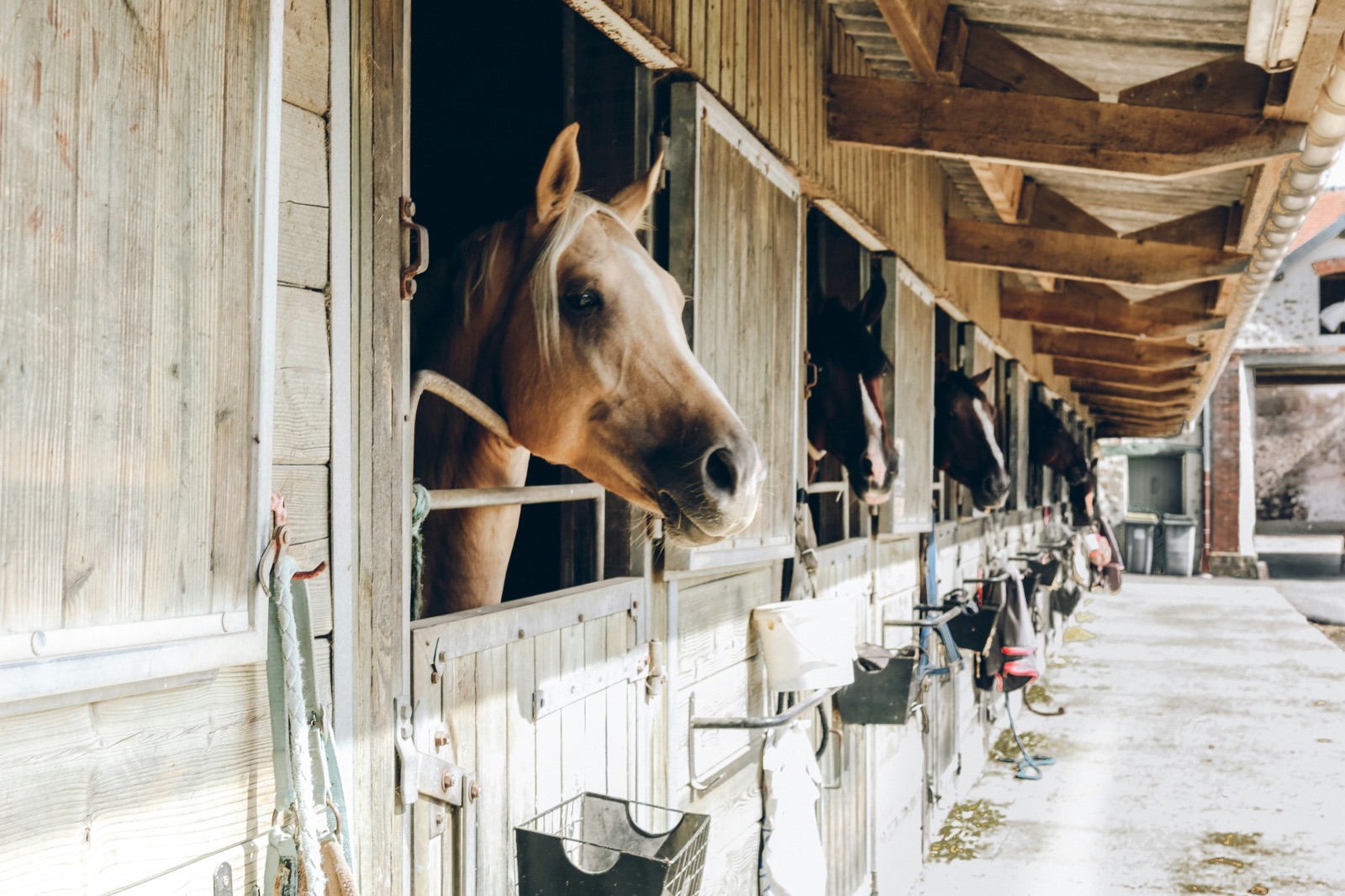
A palomino horse looking out from an open stable door, with a row of stable doors fading down the aisle behind.

Stops the bait-and-switch

When every yard answers the same nine questions, you compare claims line-for-line. The “Updated” date stamp on each block tells you when the yard last touched their answer — a block confirmed this season is a stronger commitment than one untouched for eighteen months. If reality drifts from the listing, you’ve got a written, dated reference point to come back to.

Surfaces the soil question

Soil is the most under-asked variable in livery. Owners figure it out the hard way, usually around mid-November:

“I moved to a clay yard last year, and swiftly moved back to my old field which is on chalk! It was fine on clay during the summer but by this time my field was disgusting and by the time I left on 1st December I couldn’t even get my barrow through the mud!”

Matches your horse to a herd, not a yard

Group composition and sex grouping are the two fields that make or break settling-in. The same horse can thrive in one herd and unravel in another:

“An owner on my yard had to sell her lovely gelding because he couldn’t live with the fact that he was the only ‘boy’ in a field-full of girls. He’d been fine in his previous home, owner had hacked him out, the lot, but here at my place he just never settled.”
For yard owners

Why it matters for yard owners

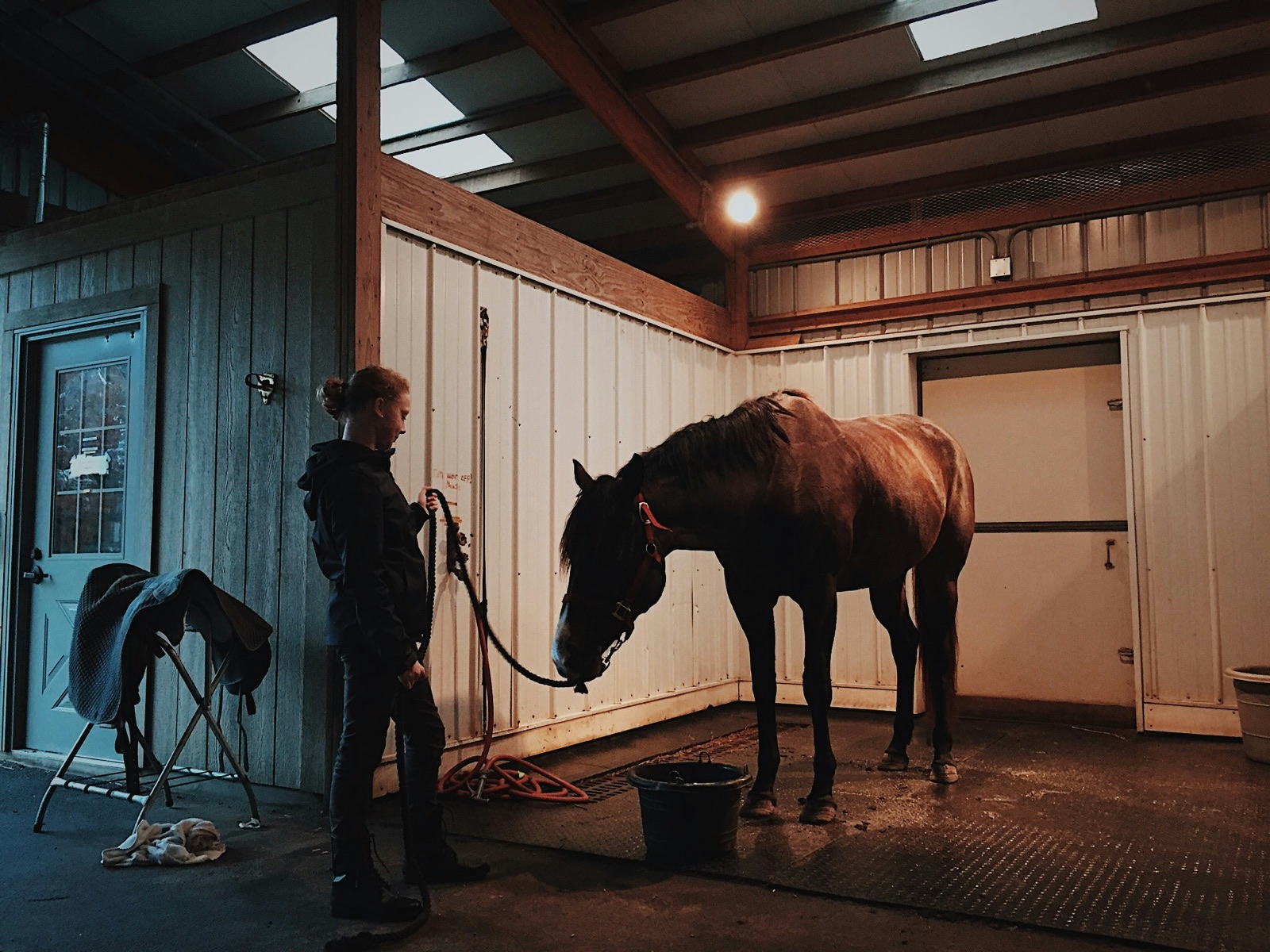
A yard owner leading a horse through a softly-lit barn aisle in the evening, saddle stand to the side.

Less time wasted on bad-fit enquiries

When prospective owners pre-screen by winter hours, group type, and soil before sending a message, the enquiries that reach you are already from people whose horse fits your set-up. Fewer tyre-kickers, fewer “sorry, didn’t realise you’re on clay” replies, more conversations that end in a viewing.

Your land management is a marketable signal

Hardstanding gateways, paddock rotation, harrowing, drainage works — the things you actually do to keep turnout viable through a wet British winter are invisible in free-text. In a structured chip, they’re the reason a discerning owner picks you over the yard down the lane:

“Horses go out every day. Good acreage per horse. Good grass coverage and gateways have hard core. Hence no mud.”

You publish once, you sell forever

Update the turnout block once and it propagates: the chip strip on your search card, the structured section on your detail page, the filters that decide whether you appear in a search at all. No more retyping the same paragraph into fifty enquiry replies — the answer is on the page before the message is sent.

How to read it

How to read the data

The numbers and chips on a turnout block are honest signals, but they only mean something in context. A yard offering 8h+ winter turnout on heavy clay is doing real work to make that happen — that’s a meaningful claim. Sub-4h winter isn’t a failure; it’s a winter-stable yard with extra steps, and for some horses (older, stiff, prone to field injury) that’s exactly what you want. Read the fields together, not in isolation.

  • 8h+ winter turnout in clay country is a real claim. Sub-4h is a winter-stable yard with extra steps.
  • “Frequent keep-in” + clay = expect 2–3 weeks of stable rest in January. Plan your fitness work accordingly.
  • Strip grazing allowed = you control the grass. Owner-managed paddock = you’re closer to private livery than full.
  • Updated date matters. A turnout block that hasn’t been touched in 18 months is itself a signal — ask the yard whether anything has changed before you commit.
FAQ

Frequently asked questions

How much turnout should a livery yard offer in winter?

There's no single right answer — it depends on land, drainage, and how many horses share the acreage. As a rough guide, most UK yards drop to 4–8 hours in winter, 8–12h is generous, and 12h+ year-round is the top decile (often only possible on chalk, limestone, or well-drained sandy soils). Anything below 4h is effectively a winter-stable yard with extra steps, which suits some horses fine — just go in with eyes open.

What's the difference between individual, paired, and herd turnout?

Individual means your horse goes out alone in their own paddock. Paired is two horses sharing. Small herd is typically 3–5 horses, large herd 6+. Individual is calmest for anxious or recovering horses but often means less grass and a lonelier life. Herds are more natural socially but introductions can be stressful, and a bad herd dynamic is hard to fix. Match the option to the horse, not the convenience.

Why does soil type matter on a livery yard?

Soil determines how a yard rides through winter. Clay holds water, gets bottomless by November, and freezes into ankle-breaking ruts. Sandy and chalk soils drain fast — paddocks stay rideable months longer. Limestone is the gold standard. Loam sits in the middle. The same yard's turnout offer is materially different on clay versus chalk; soil context turns 'we try our best' into something you can actually evaluate.

Is clay grazing always bad for horses?

No. Clay is fine in summer and often holds better grass than free-draining soils. The problem is winter: clay yards typically reduce or pause turnout from late November through February to protect the land. If a clay yard has invested in hardstanding gateways, all-weather pens, drainage works, and paddock rotation, it can run year-round; without those, expect winter to be stable-heavy. The structured mud-management field tells you which kind you're looking at.

What does 'stabled in bad weather' actually mean?

It varies wildly, which is exactly why we made it a structured field with a free-text qualifier. 'Out in all weather' means the horse is out unless there's a serious reason to bring in. 'Occasional keep-in' typically means named storms or ice. 'Frequent keep-in' means most wet or cold weeks have stable days. 'Stabled by default in winter' means December through February is largely indoors. Read the qualifier — that's where the honesty lives.

Can I filter UK livery yards by turnout hours on OpenStable?

Yes. The search page has a minimum winter-hours filter (set it to 8 or 12 to see only generous-turnout yards), a group composition filter (individual, paired, herd), and a soil-type filter. You can also sort results by 'Most winter turnout' to see the highest-turnout yards first. All three filters combine, so 'sandy soil + 12h+ winter + individual paddock' is a one-click query.

What is strip grazing and why does the field on the listing matter?

Strip grazing is when you fence off a small section of paddock and move the fence forward by a metre or two each day, controlling exactly how much grass the horse eats. It's essential for laminitics, good-doers, and many native breeds. Some yards allow it freely, some restrict it, some refuse outright because it complicates rotation. The yes/no field on every listing means you don't find out it's banned three weeks after moving in.

Do all OpenStable yards have structured turnout data?

Most do, and we prompt yards to add it during onboarding and at renewal. A small number of older listings still have free-text only — you'll see those without the structured chips on the search card. Every block carries an 'Updated' date stamp, so you can tell when a yard last touched their answer; a block updated this season is a stronger signal than one untouched for eighteen months.

More about how OpenStable works

Stop reading “turnout: yes.” Start filtering for what you actually need.

Whether you’re looking for a yard or running one, the structured turnout block does the heavy lifting on both sides of the conversation.